Why Pool Deck Cracks Matter More in Arizona Than You'd Think
A crack that looks small today is rarely the crack you'll have in two years if it's left alone.
September 10, 2026 · 3 min read
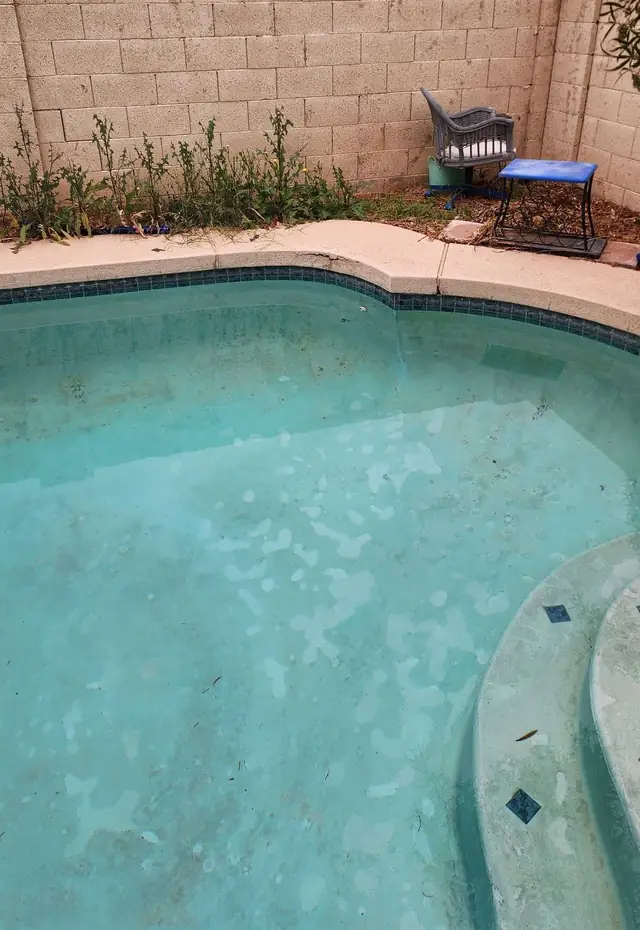
Almost every concrete pool deck develops a crack eventually. That's not a sign of bad workmanship on its own, concrete is a rigid material sitting on ground that moves, and Arizona's ground moves more than most people realize. What matters isn't whether you have a crack. It's what kind of crack it is, and whether the thing causing it is still active underneath the surface.
Hairline cracks versus structural cracks
A hairline crack is thin, usually well under an eighth of an inch wide, doesn't have any vertical offset between the two sides, and tends to run in a fairly straight, predictable line. These are common in concrete and are usually the result of ordinary shrinkage as the slab cured, or minor surface-level movement. They're a cosmetic concern more than a structural one, though left completely unaddressed they can still let water intrude underneath the coating.
A structural crack is a different animal. It's wider, often shows a visible step or offset where one side of the crack sits higher or lower than the other, and it tends to keep growing rather than staying the same size year over year. Structural cracks usually mean something underneath the slab, soil settling, an eroded base, or a plumbing issue nearby, is actively moving. That's the kind of crack you address the cause of, not just the surface of.
- Hairline: thin, no offset, straight, usually shrinkage-related
- Structural: wider, visible offset, growing over time, usually soil or base-related
- Cracks radiating from pool equipment or a slab edge deserve extra attention regardless of width
What Arizona's soil and heat cycling actually do to a slab
The Phoenix Valley sits on expansive clay-heavy soil in a lot of areas, and that soil doesn't behave the same way year-round. It swells when it takes on moisture from monsoon rain or irrigation, and it shrinks as it dries out again in the long stretches of heat between storms. A concrete slab poured on top of that soil moves with it, expanding and contracting in ways a slab on more stable ground never would.
On top of the soil movement, Arizona pool decks go through an unusually harsh daily heat cycle. Surface temperatures on an uncoated slab can swing more than fifty degrees between early morning and mid-afternoon in summer. Concrete expands when it heats and contracts when it cools, and that daily cycle, repeated for months every year, puts real fatigue stress on a slab that a milder climate never would. Combine soil movement underneath with heat cycling on top, and you get exactly the kind of conditions that turn a small hairline crack into a wider, more active one over a few seasons.
Why filling a crack cosmetically doesn't solve it
It's tempting to deal with a crack by filling it with caulk or a patch compound and calling it done, especially if it's under a coating and mostly out of sight. The problem is that a cosmetic fill doesn't address whatever is actually causing the movement underneath. If the soil is still shifting or the base is still settling, the crack will find a new path to the surface, sometimes right next to the old repair, sometimes through it. A cosmetic patch on an active crack is a temporary cover, not a fix.
A proper repair addresses the crack at the right depth, accounts for what's actually moving underneath it, and only then finishes the surface back to match the surrounding deck. That's part of why crack repair and restoration is listed as its own service for commercial and HOA properties, rather than folded into a quick patch job, it genuinely is different work.
What to do if you're seeing cracks now
If your cracks are thin, stable, and haven't changed in appearance over a year or more, they're likely just cosmetic and can be addressed as part of a normal resurfacing. If you're seeing offset, growth, or cracks that seem to be multiplying, that's worth a proper look before any surface work goes over the top of them. AZ Deck has been repairing and resurfacing pool decks across the Valley since 1997 and offers a free on-site estimate to look at exactly this kind of question before any work is scheduled.
AZ Deck, (480) 712-3762
Call (480) 712-3762More articles
What Cool Deck Coating Actually Is (And Why It Matters in Arizona)
It's not paint, and it's not just a new pour. Here's what's really happening under your feet.
Signs Your Pool Deck Needs Resurfacing, Not Just a Touch-Up
Some deck problems are cosmetic. Some mean the surface is failing underneath. Here's how to tell which is which.